Car theft has always been a risk, but in recent years, Dodge Hellcats have become some of the most frequently stolen vehicles in America. Searches for “Dodge Hellcat stolen” have skyrocketed, and for good reason. Challenger and Charger Hellcats are topping theft lists across the U.S., often disappearing in minutes.
Insurance companies, police reports, and countless surveillance videos tell the same story: thieves are organized, fast, and prepared. Understanding why Hellcats are targeted, how the thefts happen, and what actually prevents them is critical if you own one.
Why Dodge Hellcats Are Targeted by Thieves
The Dodge Challenger and Charger Hellcats aren’t just muscle cars — they’re icons. With supercharged HEMI engines pushing 700+ horsepower, they’re dream cars for enthusiasts and high-value targets for organized crime rings. Unfortunately, those same qualities make “Dodge Hellcat stolen” headlines all too common.
Several factors combine to make Hellcats especially vulnerable:
- High resale and parts value – A Challenger or Charger Hellcat can reach $70,000+ on the used market, and their engines, transmissions, and electronics are worth thousands on the black market. Even stripped, a Hellcat is a jackpot for thieves.
- Performance appeal – With their reputation as street-racing legends, Hellcats are often stolen for joyrides or to be resold to buyers who crave their unmatched horsepower.
- Factory vulnerabilities – Dodge’s shared key and software systems make them easier to bypass than exotics like Porsche or Ferrari, which explains why Hellcat theft rates top U.S. insurance lists year after year.
- Insurance and recovery gaps – Even when theft is covered, owners face spiking premiums, long delays, and diminished resale value. NICB data has consistently ranked Dodge Chargers and Challengers among the most stolen cars nationwide.
For professional theft rings, Hellcats are the “perfect crime car” — fast to steal, easy to resell, and in high demand.
Real Story: Dodge Challenger Hellcat Stolen in 6 Minutes
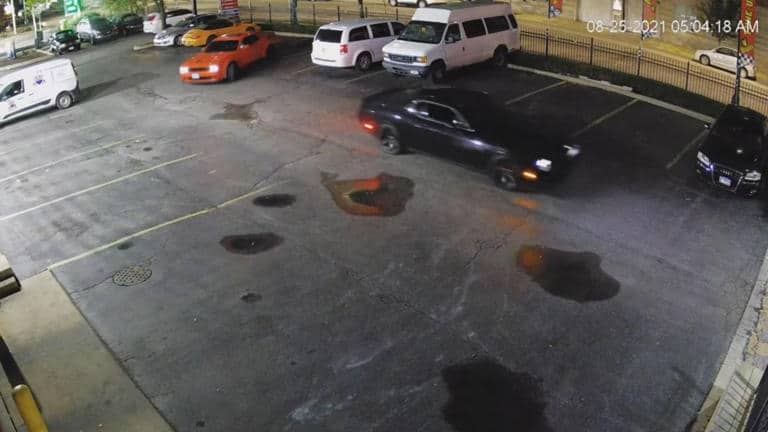
One of the clearest examples of how quickly a Hellcat can disappear came from a Chicago surveillance video.

At around 5:00 a.m., a stolen Jeep Grand Cherokee pulled into a parking lot and parked next to a Dodge Challenger Hellcat. An orange Dodge Challenger trailed close behind, backing into a spot across the lot — almost certainly a lookout vehicle.
Two men exited the Jeep, splitting their roles. One acted as a lookout, while the other got to work inside the Hellcat. Working under the dash, hidden below the window line, the thief had time to connect into the car’s system and likely reprogram a new key.
During the heist, an Audi SUV entered the lot and parked briefly. This wasn’t a coincidence — the Audi’s driver was yet another lookout. Three stolen cars had converged just to secure the Hellcat.
Within minutes, the Hellcat roared to life. As the Challenger drove away, both the Jeep and Audi pulled out too, leaving the lot empty. The Porsche 911 Cabriolet parked nearby wasn’t touched, despite being worth more than the Hellcat. Why? Because it’s significantly harder to steal.
The entire theft took about 6 minutes. This guy must be a rookie because most are stolen in less than 3-4 minutes. The video showed exactly why Hellcats are among the easiest high-value targets for organized crime rings. Stories like this aren’t rare, from dealership break-ins to street thefts, Hellcats continue to dominate NICB’s most-stolen lists nationwide.
How Dodge Hellcats Are Usually Stolen
Surveillance videos, police reports, and insurance claims show that most Dodge Challenger Hellcat stolen cases follow a similar playbook. Crews work in teams, arrive in stolen support vehicles, and target vulnerable models that can be started in under 3 minutes in most cases, unless you’re a rookie. Then it takes 5-7 minutes.
The most common theft methods include:
- Key cloning or reprogramming – Thieves access the OBD-II port and program a fresh fob, giving them full control in minutes.
- Under-dash hotwiring – Aftermarket alarms and factory systems are usually wired under the dash, the first place thieves look. Working below the window line, they can disable alarms and jump wires unseen.
- Relay attacks – By amplifying a key fob’s signal from inside your house, criminals can unlock and start the car even if the original key never leaves your pocket.
- Lookout and support vehicles – Stolen SUVs or sedans often accompany the job, providing cover and quick escape support.
The critical factor in almost every Dodge Challenger Hellcat stolen report is speed. In Chicago, a Dodge Challenger Hellcat was stolen in just 6 minutes with multiple lookouts on site. In other cases, Hellcats vanish in as little as two minutes. Once they’re gone, even GPS trackers may be too late — cars are stripped, resold, or shipped abroad.
That’s why stopping theft before it starts — not recovery — is the only strategy that works.
Why Car Alarms and Factory Updates Don’t Work
Car alarms were once considered the best theft deterrent, but today they’re almost useless. They are wired under the dash, which is the first place thieves look, making them easy to trace and silence within minutes. Even when alarms do go off, most people ignore the sound, assuming it is just another false trigger. Organized theft crews also plan for alarms and expect them, so the presence of one rarely changes their approach.
Dodge has released several factory security updates over the years, but real-world theft reports show they have done little to slow down criminals. For every patch, thieves quickly find a workaround. GPS trackers are sometimes marketed as a solution, but even the best car security system is ineffective if it only helps after the theft has already happened. By the time a stolen car is located, it may be damaged, stripped, or shipped across the border. Once CarFax marks it as “stolen/recovered,” the vehicle’s resale value can drop by 10 to 20 percent.
That’s why prevention is critical, and why a proven immobilizer like the Ravelco Anti-Theft Device remains the only effective way to stop Dodge Hellcat theft before it begins.
Why Ravelco Works for Hellcats
Dodge Hellcats are high on every car thief’s list, which means generic alarms or software updates simply aren’t enough. Owners searching “Dodge Hellcat stolen” aren’t looking for another ineffective patch — they need a proven solution. Enthusiast owners need a security device they can be enthusiastic about. With a customer rating of 4.9 out of 5 stars, that’s where the Ravelco Anti-Theft Device comes in.
Unlike factory systems or aftermarket alarms, Ravelco is built to stop theft before it starts. The unique plug-and-socket design keeps the engine from running without the Ravelco plug, making hotwiring or key reprogramming impossible. The installation is customized for each vehicle leaving no ‘one way to bypass’ the Ravelco possible. The wiring is hidden under the hood, not under the dash where thieves expect it, so even experienced crews can’t find and disable it in minutes. For Hellcat owners, that difference matters: organized rings specifically target Challengers and Chargers because of their horsepower, resale value, and parts demand. With over 6 million installations and zero documented defeats, Ravelco has proven itself across muscle cars, trucks, and fleets.
Key reasons Ravelco is the only proven Dodge Hellcat theft deterrent:
- Prevents engine start – Without the Ravelco plug, the engine will not run. You could leave your ignition key in the vehicle and they won’t drive off with it.
- Hidden wiring – Installed under the hood and buried in the electrical system, not under the dash.
- Immune to hacking – Unlike electronic systems, Ravelco cannot be cloned, hacked, or bypassed without knowing how the Ravelco was wired on THAT PARTICULAR CAR. Our dynamic installation approach (not static like ever other security device) is what has given Ravelco our record.
- Proven record – Over 6 million installations since 1976, with zero documented defeats.
For Hellcat owners, that makes Ravelco the most effective way to protect your investment — preventing theft entirely, rather than dealing with the aftermath.
Dodge Hellcat Theft: FAQs
Why are Dodge Hellcats stolen so often?
Dodge Hellcats combine extreme horsepower, strong resale value, and high demand on the black market, making them one of the most attractive targets for organized theft rings. Unlike many exotic cars, they use factory systems that are easier to bypass, so thieves can get them running quickly. Their engines, transmissions, and parts can also fetch thousands when stripped and resold, which adds to their appeal. For thieves, Hellcats are a high-value target with relatively low effort required.
How fast can thieves steal a Hellcat?
Surveillance videos and police reports show Hellcats being stolen in as little as two to eight minutes. Skilled crews often arrive in multiple vehicles, use cloned keys or reprogramming tools, and have a lookout to cover their tracks. Because they can work under the dash below window level, most of their activity goes unnoticed until it’s too late. This speed is why prevention is far more effective than hoping for recovery afterward.
Does Dodge’s factory security update fix the issue?
Not entirely. While Dodge has rolled out several software and key-based updates, thieves quickly develop workarounds that make those measures less effective in the real world. Many recent reports of Dodge Challenger Hellcat stolen incidents prove that factory updates alone aren’t stopping thefts. Owners looking for true prevention need a mechanical solution that makes the engine impossible to start.
Are GPS trackers enough?
No, GPS trackers may help after a Hellcat has already been taken. By the time authorities locate the car, it may have been stripped, damaged, or exported, leaving owners with diminished value and lengthy insurance claims. Thieves also know how to locate and disable tracker antennas, making recovery unreliable. GPS can be a useful backup, but it’s not a primary theft deterrent.
What’s the best theft deterrent for a Hellcat?
The Ravelco Anti-Theft Device is the most reliable solution because it prevents the engine from running at all. Unlike alarms or GPS trackers, Ravelco eliminates the opportunity for hotwiring, key cloning, or hacking. With wiring hidden under the hood and a unique plug system, it has never been defeated in nearly 50 years of use. For Hellcat owners, it’s the only system proven to stop theft before it happens.
Why are Dodge Hellcats more stolen than other muscle cars?
While Camaros and Mustangs are popular, Dodge Hellcats are more frequently stolen because of their unique combination of speed, resale value, and vulnerabilities. Shared key systems and bypassable factory security make them easier to steal than many competitors. On top of that, their 700+ horsepower engines and parts carry high demand in both legal and illegal markets. This mix of desirability and accessibility makes Hellcats stand out as prime theft targets.
Protect Your Hellcat Before It’s Too Late
The Chicago theft shows how organized and determined these rings are — but also how vulnerable Hellcats remain. Alarms and factory patches don’t work, and trackers only help after the fact.
The only proven way to prevent a Dodge Hellcat stolen headline with your car is to install the Ravelco Anti-Theft Device.
Don’t wait until it’s too late. Secure your Challenger or Charger Hellcat with the system that thieves have never beaten.